Creating new forms of knowledge, institutions, collectivity, community, and design
Course and Project Relationship Network
Interactive network graph displaying 45 projects and their associated course tags.
-
CalArts꞉ Practicing Care - Ethics, Labor and Representation in Architecture (Project)
- Tagged with: #Affiliated-Courses, #CalArts, #Architecture
-
CalArts꞉ Radical Redesign (Project)
- Tagged with: #Affiliated-Courses, #CalArts, #Critical-Ethnic-Studies, #Interdisciplinary
-
Carleton University꞉ Cooperative Futures (Project)
- Tagged with: #Courses, #Spring-2021, #Studio, #Carleton
-
Carleton University꞉ For ∕ With (Project)
- Tagged with: #Courses, #Spring-2021, #Studio, #Carleton
-
Carleton University꞉ Material Translations (Project)
- Tagged with: #Courses, #Spring-2023, #Studio, #Carleton
-
CCNY x Yale University꞉ Fugitive Practice (Project)
- Tagged with: #Courses, #Seminar, #Spring-2022, #CCNY
-
CCNY x Yale University꞉ Marronage Practice (Project)
- Tagged with: #Fall-2023, #Seminar, #Courses, #CCNY
-
CCNY꞉ Black Cultural Zone Resilience Co-Hub (Project)
- Tagged with: #Affiliated-Courses, #Architecture, #CCNY
-
CCNY꞉ Identity, Justice, & Pedagogy (Project)
- Tagged with: #Courses, #Learn-In, #Fall-2021, #CCNY
-
Columbia GSAPP꞉ Power Tools (Project)
- Tagged with: #Courses, #Seminar, #Spring-2021, #Columbia
-
Columbia University + Tuskegee University꞉ Difference and Design (Project)
- Tagged with: #Affiliated-Courses, #Architecture, #Urbanism, #Columbia, #Tuskegee
-
Cornell University and Pratt University꞉ Identity and Architecture (Project)
- Tagged with: #Affiliated-Courses, #Architecture, #Cornell, #Pratt
-
Cornell University꞉ Housing + Community - My Brother’s Keeper (Project)
- Tagged with: #Affiliated-Courses, #Architecture, #Cornell, #City-and-Regional-Planning
-
CU Boulder꞉ Dissent by Design (Project)
- Tagged with: #Affiliated-Courses, #Architecture, #Urbanism, #CU-Boulder, #Interdisciplinary
-
DMU Constellation at Lisbon Architecture Triennale (Project)
- Tagged with: #Exhibition, #Mississippi-State
-
DMU Constellation at Mississippi State (Project)
- Tagged with: #Exhibition, #Mississippi-State
-
DMU x DAP at Design Justice Summit (Project)
- Tagged with: #Exhibition, #Design-Justice-Summit
-
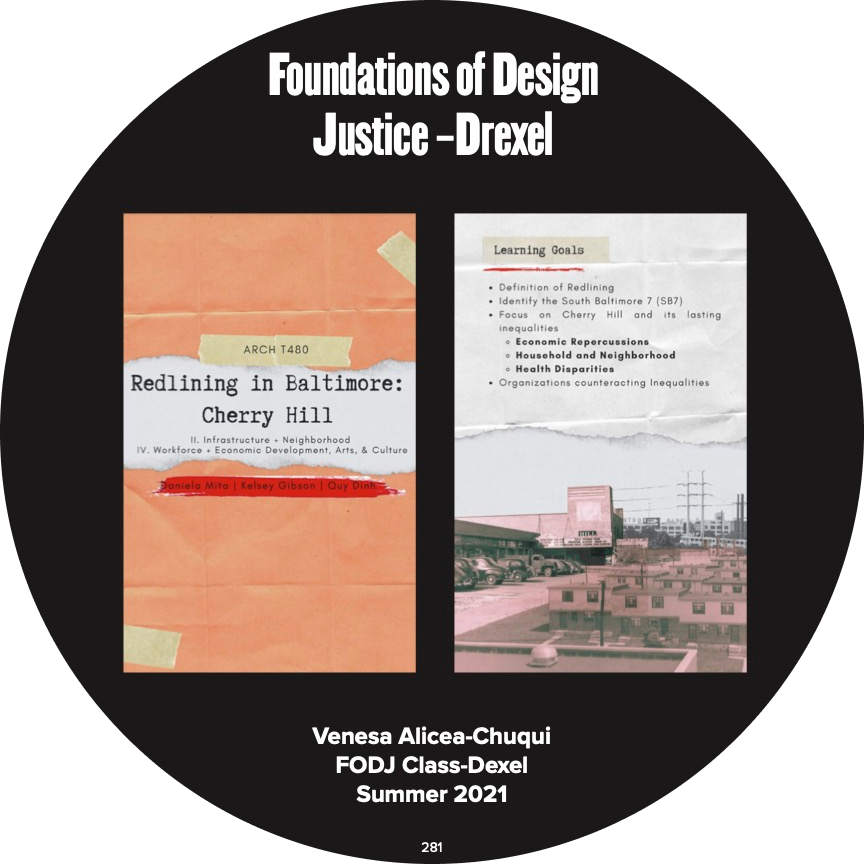
Drexel University꞉ Foundations of Design Justice (Project)
- Tagged with: #Courses, #Seminar, #Summer-2023, #Summer-2021, #Drexel
-
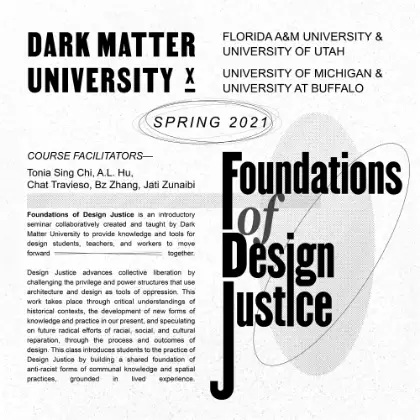
Florida A&M University x University of Utah꞉ Foundations of Design Justice (Project)
- Tagged with: #Courses, #Seminar, #Spring-2021, #FAMU
-
Harvard꞉ Urban Design and the Color Line (Project)
- Tagged with: #Affiliated-Courses, #Harvard, #Urban-Design
-
Howard University x Yale University꞉ Fugitive Practice (Project)
- Tagged with: #Courses, #Spring-2021, #Seminar, #Howard, #Yale
-
Illinois Tech꞉ Tropical Modernity - Journeys toward the Tropical Botanical City (Project)
- Tagged with: #Affiliated-Courses, #Illinois-Tech, #Architecture, #Urbanism, #Landscape-Architecture
-
Institution - Program Name (Project)
- Tagged with: #Courses, #Fall-2023, #Seminar
-
JADE Philadelphia꞉ Social Justice in the Built Environment (Project)
- Tagged with: #Courses, #Fall-2021, #Learn-In, #JADE
-
MIT꞉ The Fire This Time - Race and Racism in American Cities (Project)
- Tagged with: #Affiliated-Courses, #MIT, #Urban-Planning
-
NYU꞉ Planning Healthy Neighborhoods (Project)
- Tagged with: #Affiliated-Courses, #NYU, #Urban-Planning, #Public-Health, #Public-Policy
-
Stanford University꞉ Joy Division (Project)
- Tagged with: #Affiliated-Courses, #Design, #Art, #Engineering, #Stanford
-
Summer Institute꞉ Design Voices 2026 (Project)
- Tagged with: #Traveling-Workshop, #Courses, #Summer-2026
-
Summer Institute꞉ Freedom Ride 2024 (Project)
- Tagged with: #Summer-2024, #Traveling-Workshop, #Courses
-
Syracuse University x University at Buffalo꞉ Foundations of Design Justice @ SU Museum (Project)
- Tagged with: #Spring-2024, #Seminar, #Courses, #SyracuseU
-
Syracuse University꞉ Spatial Narratives of Design Justice (Project)
- Tagged with: #Affiliated-Courses, #SyracuseU, #Art, #Architecture, #Urban-Design
-
Temple University꞉ Guerilla Altruism - A Mini-Manual of Subversive Activism (Project)
- Tagged with: #Affiliated-Courses, #Architecture, #Design, #Planning, #Temple
-
Tuskegee University꞉ Careers in Architecture & Construction (Project)
- Tagged with: #Courses, #Seminar, #Fall-2020, #Tuskegee
-
Tuskegee University꞉ Careers in Architecture and Construction (Project)
- Tagged with: #Affiliated-Courses, #Architecture, #Tuskegee, #Construction-Science
-
University at Buffalo꞉ Alternative Careers (Project)
- Tagged with: #Courses, #Seminar, #Fall-2021, #UB
-
University at Buffalo꞉ Archives and Narratives (Project)
- Tagged with: #Studio, #Spring-2024, #Courses, #UB
-
University at Buffalo꞉ Design Justice (Project)
- Tagged with: #Courses, #Studio, #Fall-2021, #UB
-
University at Buffalo꞉ Design With (Project)
- Tagged with: #Courses, #Studio, #Spring-2022, #UB
-
University at Buffalo꞉ Foundations of Design Justice (Project)
- Tagged with: #Courses, #Seminar, #Fall-2022, #Spring-2022, #Spring-2021, #UB
-
University at Buffalo꞉ Grounds for Reparations (Project)
- Tagged with: #Affiliated-Courses, #UB, #Architecture
-
University of Detroit Mercy꞉ Climate Resiliency and Community Design (Project)
- Tagged with: #Affiliated-Courses, #Architecture, #Urban-Design, #Detroit-Mercy
-
University of Michigan꞉ Foundations of Design Justice (Project)
- Tagged with: #Courses, #Seminar, #Spring-2021, #UMich
-
University of Utah꞉ Gender, Race, and Queer Methods in Architectural Design (Project)
- Tagged with: #Affiliated-Courses, #Architecture, #Interdisciplinary, #University-of-Utah
-
Yale University w. Morgan State꞉ Urban Difference and Change (Project)
- Tagged with: #Affiliated-Courses, #Architecture, #Urbanism, #Yale, #Morgan-State
-
You Are (Anti)Racist (Project)
- Tagged with: #Exhibition, #Drexel
Programs in constellations
Over the years, Dark Matter U has developed a range of interconnected programs that operate across and beyond academic institutions. These initiatives collectively advance DMU’s commitment to design justice, collaborative knowledge production, and community-engaged practice.
Justice, Pedagogy, Design
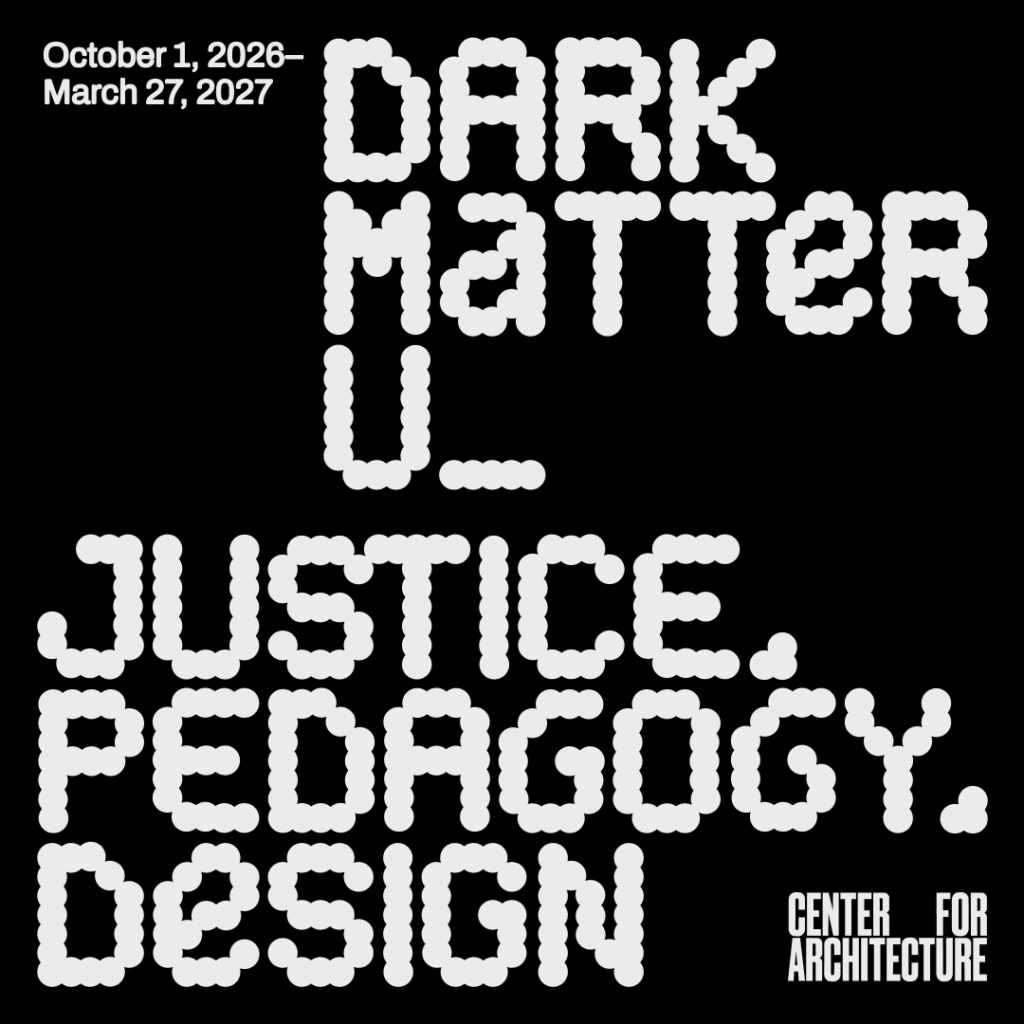
Exhibition at the Center for Architecture, October 1, 2026 – March 27, 2027
Dark Matter U: Justice, Pedagogy, Design will be the first major U.S. exhibition of and by the groundbreaking Dark Matter U (DMU) network. Initiated in the wake of the 2020 movement for Black Lives to enact systemic change across the design fields, Dark Matter U emerged as the first BIPOC-led transdisciplinary network in the built environment working to change the way we gather, teach, and produce design while simultaneously modeling a new liberatory framework. Over the past half decade, DMU has persisted and grown into an enduring voice in the built environment milieu, modeling a new counter-institutional framework by which design pedagogy, education, and generative creative output can be conceived and produced.
The exhibition is curated in three parts: recording past DMU work, documenting current DMU efforts and a provocation for the future of DMU.
Justice, Pedagogy, Design
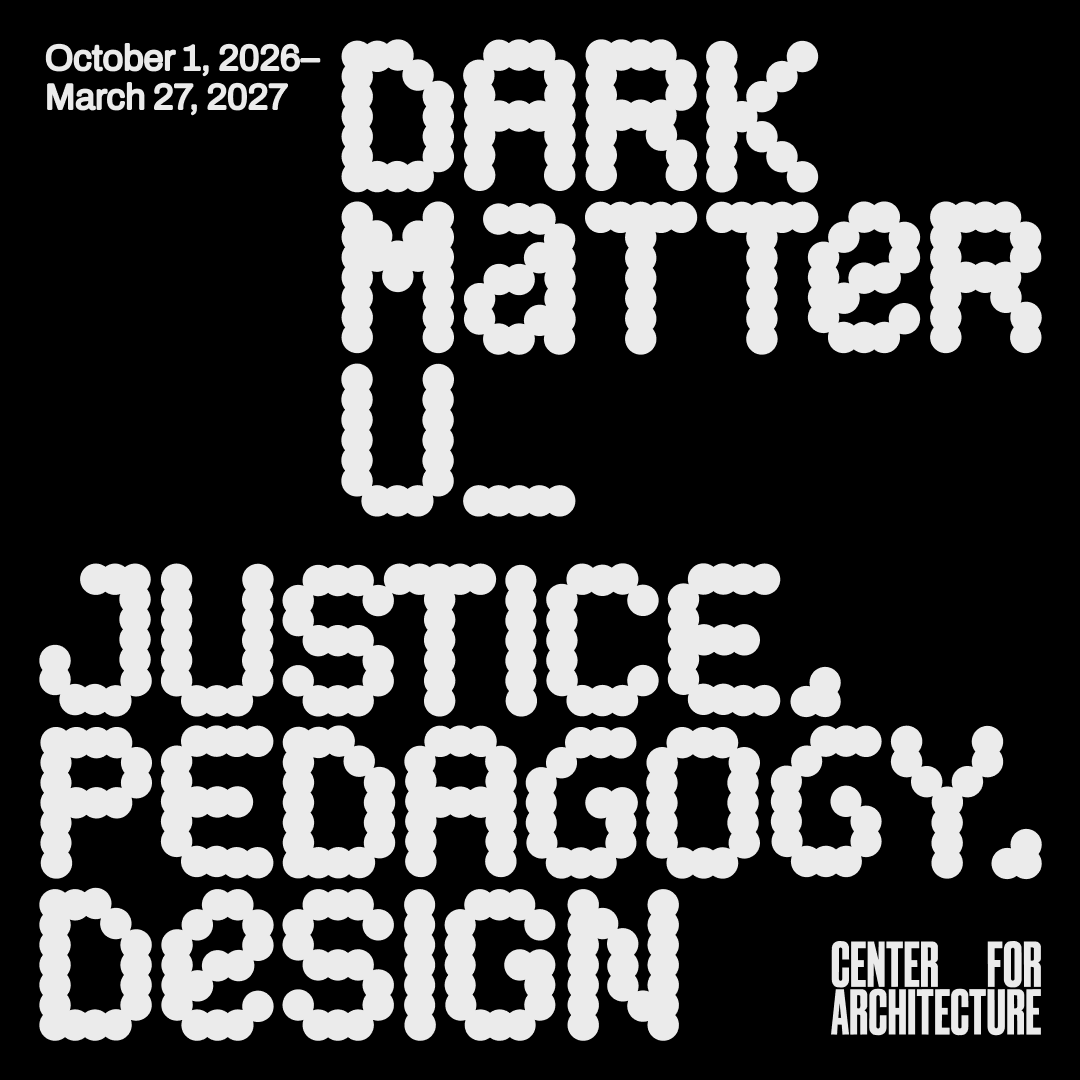
Exhibition at the Center for Architecture, October 1, 2026 – March 27, 2027
Dark Matter U: Justice, Pedagogy, Design will be the first major U.S. exhibition of and by the groundbreaking Dark Matter U (DMU) network. Initiated in the wake of the 2020 movement for Black Lives to enact systemic change across the design fields, Dark Matter U emerged as the first BIPOC-led transdisciplinary network in the built environment working to change the way we gather, teach, and produce design while simultaneously modeling a new liberatory framework. Over the past half decade, DMU has persisted and grown into an enduring voice in the built environment milieu, modeling a new counter-institutional framework by which design pedagogy, education, and generative creative output can be conceived and produced.
The exhibition is curated in three parts: recording past DMU work, documenting current DMU efforts and a provocation for the future of DMU.
Architect Magazine
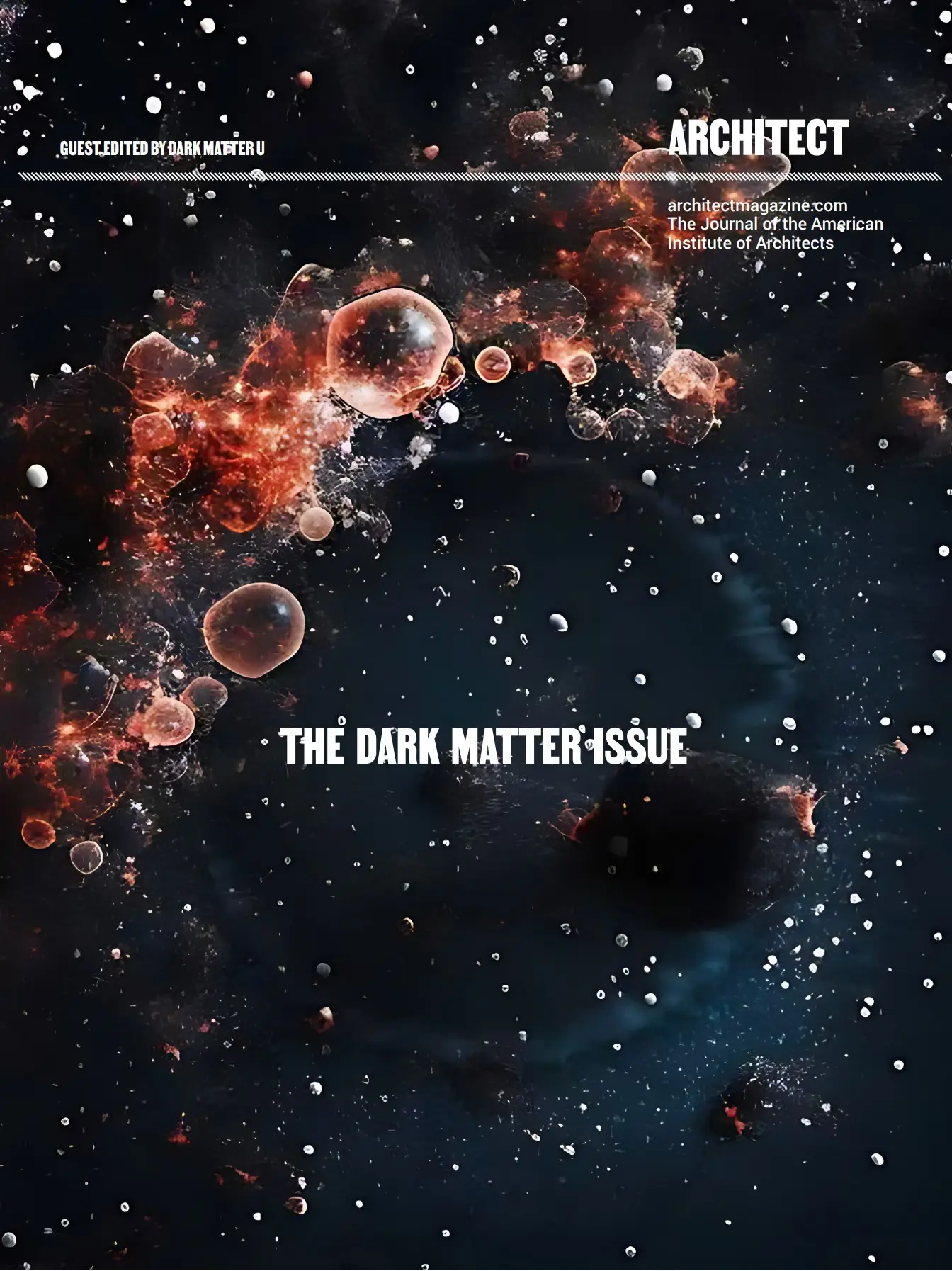
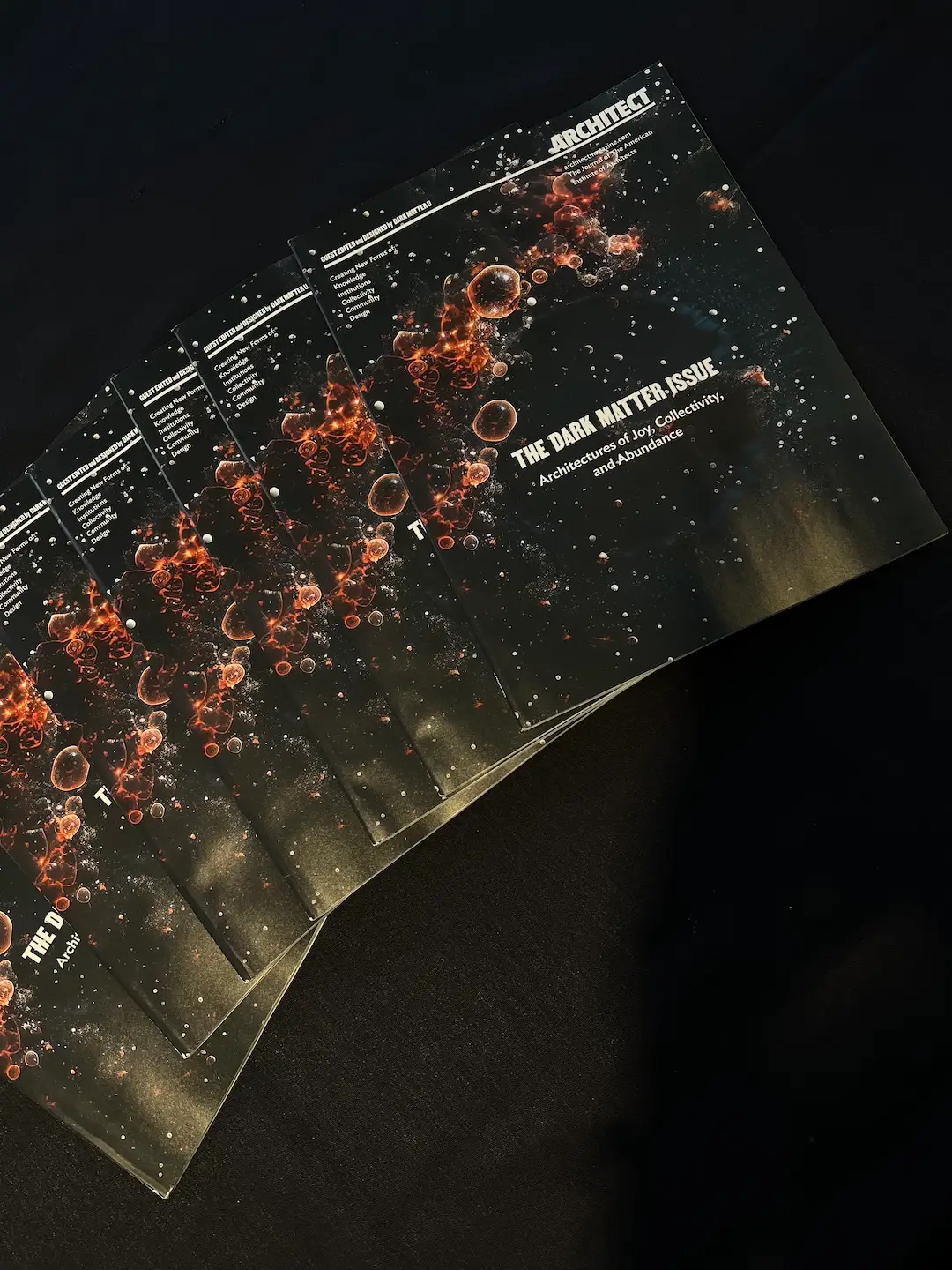
Architectures of Joy, Abundance, and Collectivity
Architectures of Joy, Abundance, and Collectivity, a special issue of ARCHITECT Magazine, was developed through a collaborative process led by Dark Matter U (DMU), a democratic, BIPOC-led collective working across architecture and the built environment. Produced as a co-authored, co-edited, and collectively designed publication, the issue reframed architectural discourse by centering design justice, lived experience, and shared forms of knowledge production.
The issue asserted that architecture can be a site of joy, abundance, and collective imagination. It highlighted the expansive contributions of designers, educators, and communities working across disciplines and geographies, while offering a vision for a more just, inclusive, and socially engaged future for the built environment.
DMU x Lisbon
Trienal de Arquitectura de Lisboa
DMUxLisbon is both a living document and a real-time modeling of counter-institutionality within the 2022 Trienal de Lisboa through a collective “constellation” of content co-generated by the network’s many members. This constellation is both a showcasing of DMU’s work and methods, and a manifestation of our multiple, situated identities and narratives. I served as a project lead and managed the design development and installation. DMUxLisbon uses a site-specific installation of print and digital elements, which form constellations of collective knowledge, both embedded within and layered across the Canons gallery and beyond the museum walls themselves.
DMU x Lisbon
Trienal de Arquitectura de Lisboa
DMUxLisbon is both a living document and a real-time modeling of counter-institutionality within the 2022 Trienal de Lisboa through a collective “constellation” of content co-generated by the network’s many members. This constellation is both a showcasing of DMU’s work and methods, and a manifestation of our multiple, situated identities and narratives. DMUxLisbon uses a site-specific installation of print and digital elements, which form constellations of collective knowledge, both embedded within and layered across the Canons gallery and beyond the museum walls themselves.



DMU Summer Institute
Trienal de Arquitectura de Lisboa
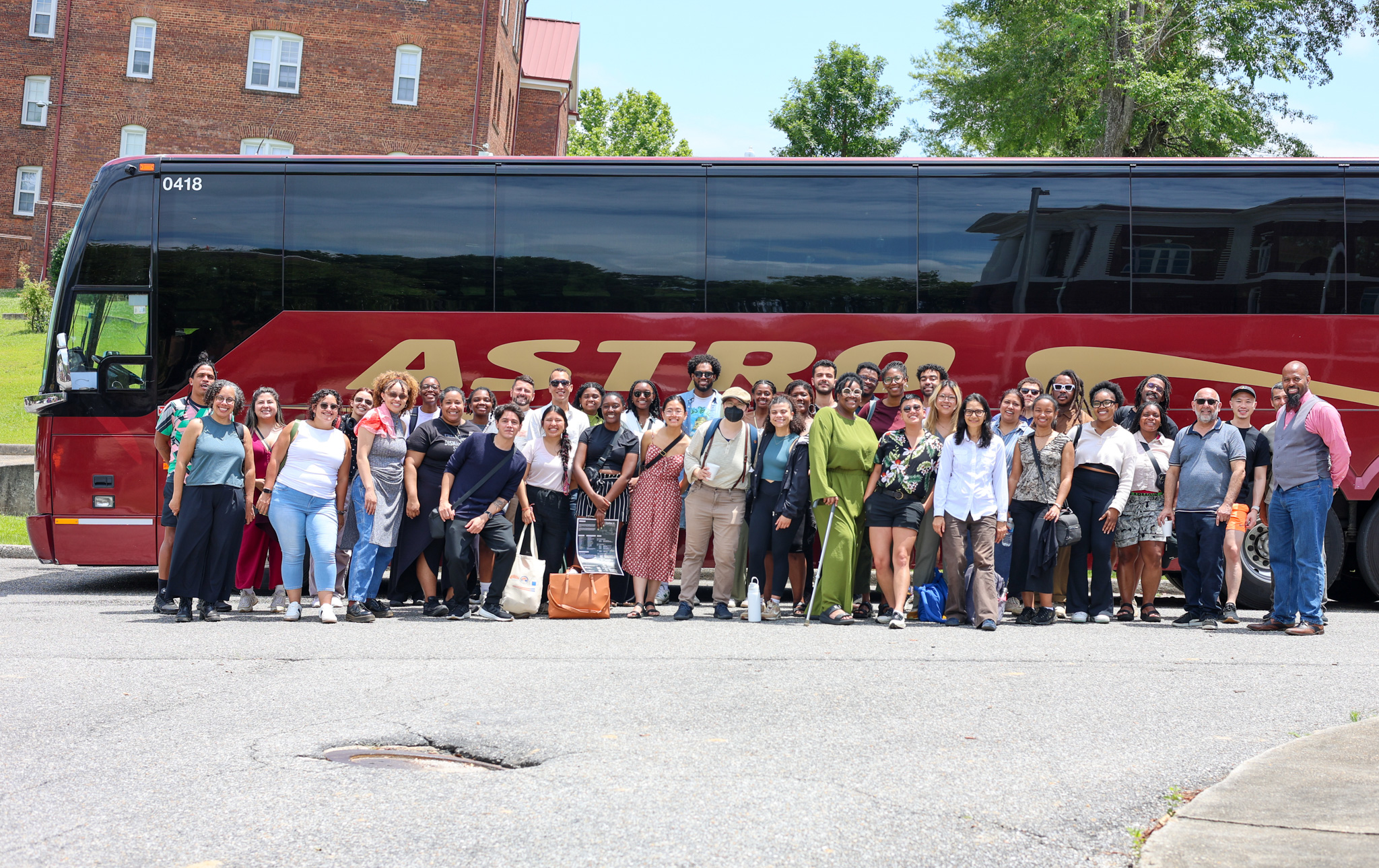
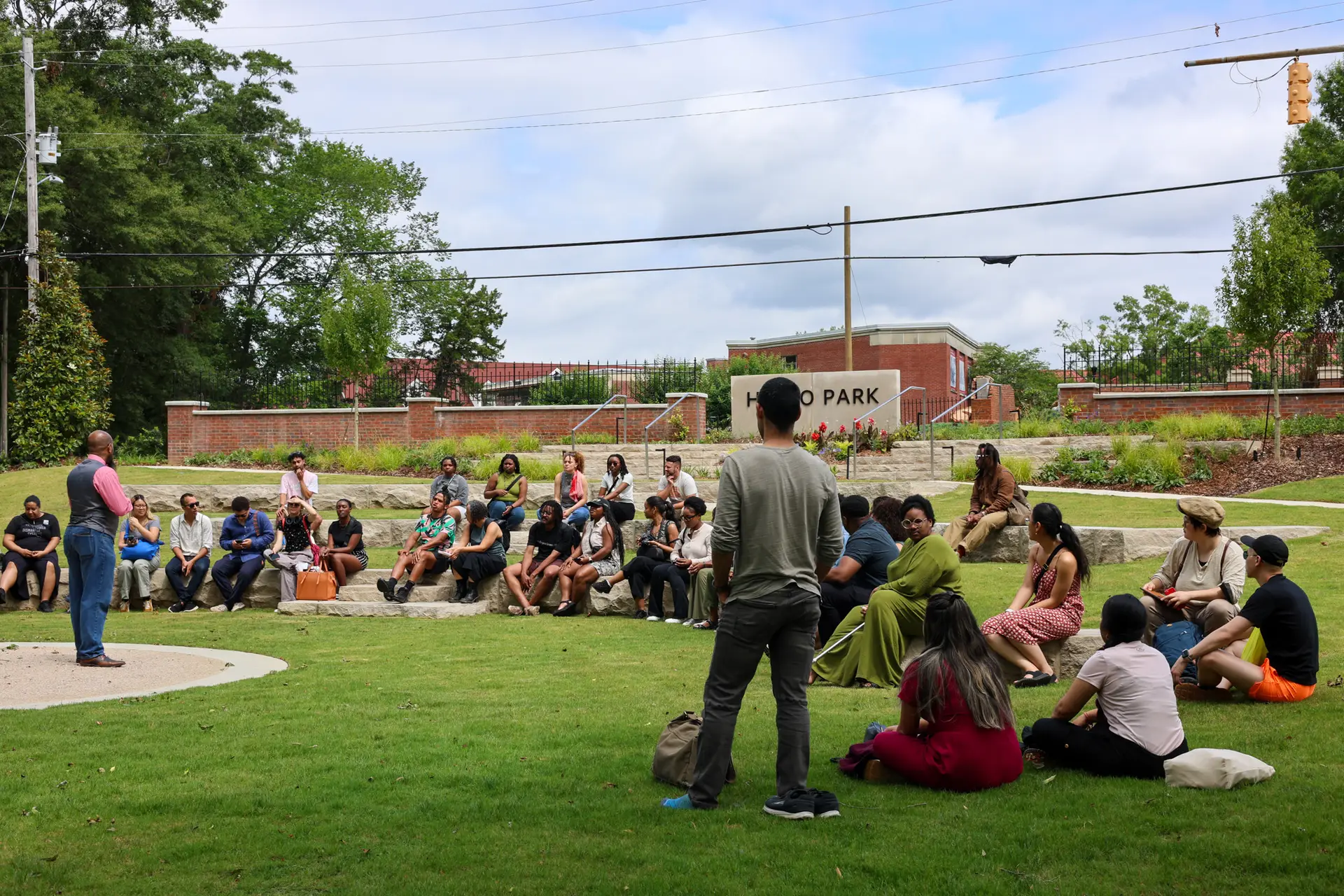
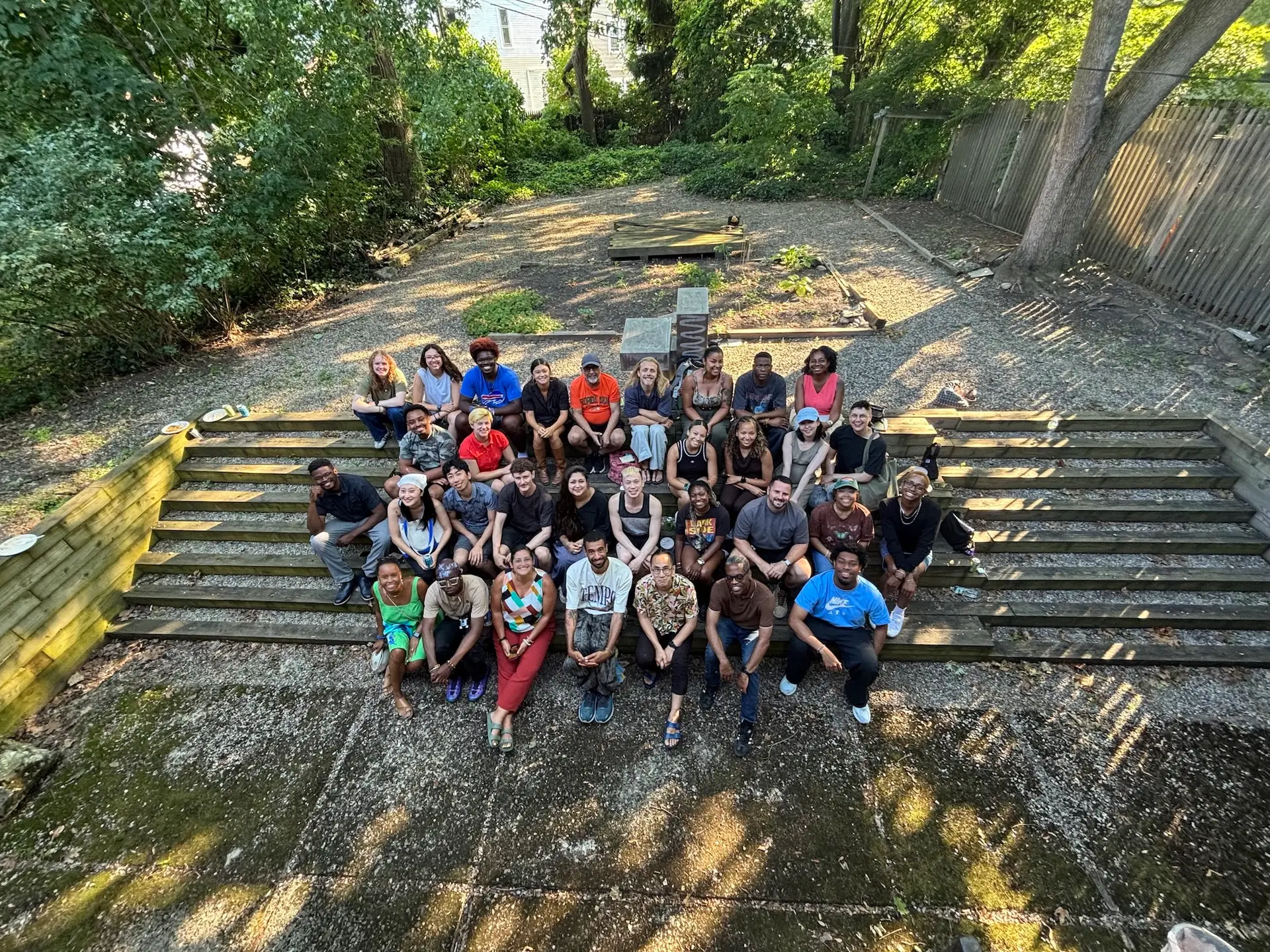
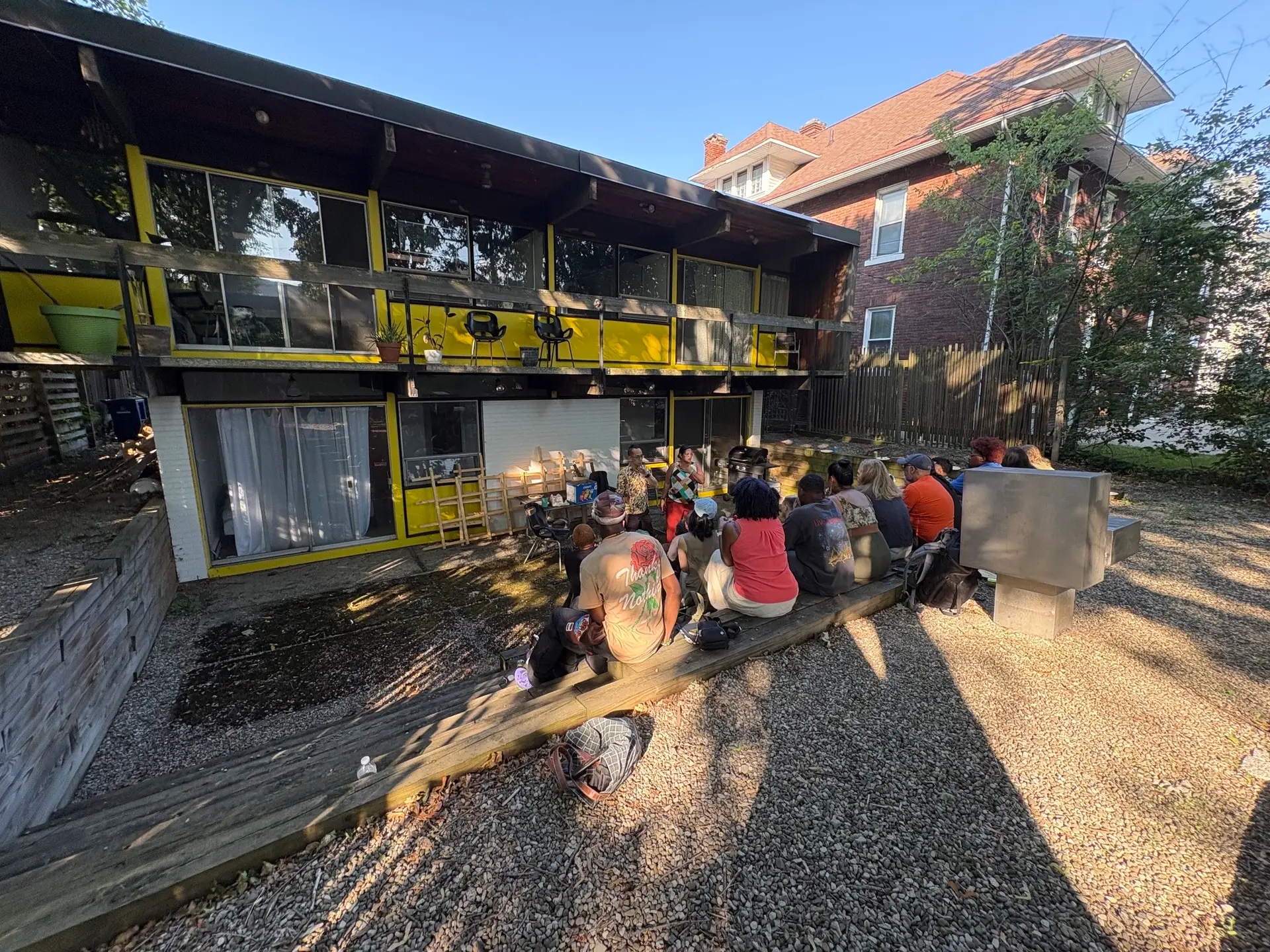
The DMU Summer Institute was a multi-year, two-phase grant-funded initiative in collaboration with Florida A&M University (FAMU) that brought together students, educators, and emerging practitioners from architecture, landscape architecture, and urban design across institutions throughout the United States and Canada. Conceived as an exploration of working beyond traditional academic structures, the program fostered cross-institutional collaboration and interdisciplinary exchange.
Together, the two phases—mobile and place-based—offered a complementary approach to experiential learning, advancing a shared commitment to equity, justice, and collective knowledge-building in design.
DMU Summer Institute
Multi-phase convening
The DMU Summer Institute was a multi-year, two-phase grant-funded initiative in collaboration with Florida A&M University (FAMU) that brought together students, educators, and emerging practitioners from architecture, landscape architecture, and urban design across institutions throughout the United States and Canada. Conceived as an exploration of working beyond traditional academic structures, the program fostered cross-institutional collaboration and interdisciplinary exchange.
Together, the two phases—mobile and place-based—offered a complementary approach to experiential learning, advancing a shared commitment to equity, justice, and collective knowledge-building in design.
Foundations of Design Justice
Trienal de Arquitectura de Lisboa
Foundations of Design Justice is an introductory seminar collaboratively created and taught by Dark Matter U to provide knowledge and tools for design students, teachers, and workers to move forward together. Design Justice advances collective liberation by challenging the privilege and power structures that use architecture and design as tools of oppression.
Foundations of Design Justice
Multi-phase convening
Foundations of Design Justice is an introductory seminar collaboratively created and taught by Dark Matter U to provide knowledge and tools for design students, teachers, and workers to move forward together. Design Justice advances collective liberation by challenging the privilege and power structures that use architecture and design as tools of oppression.
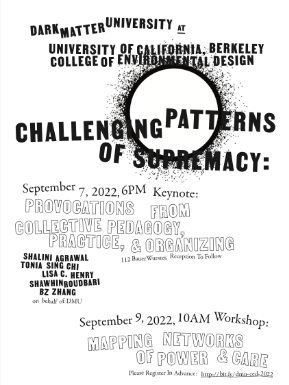
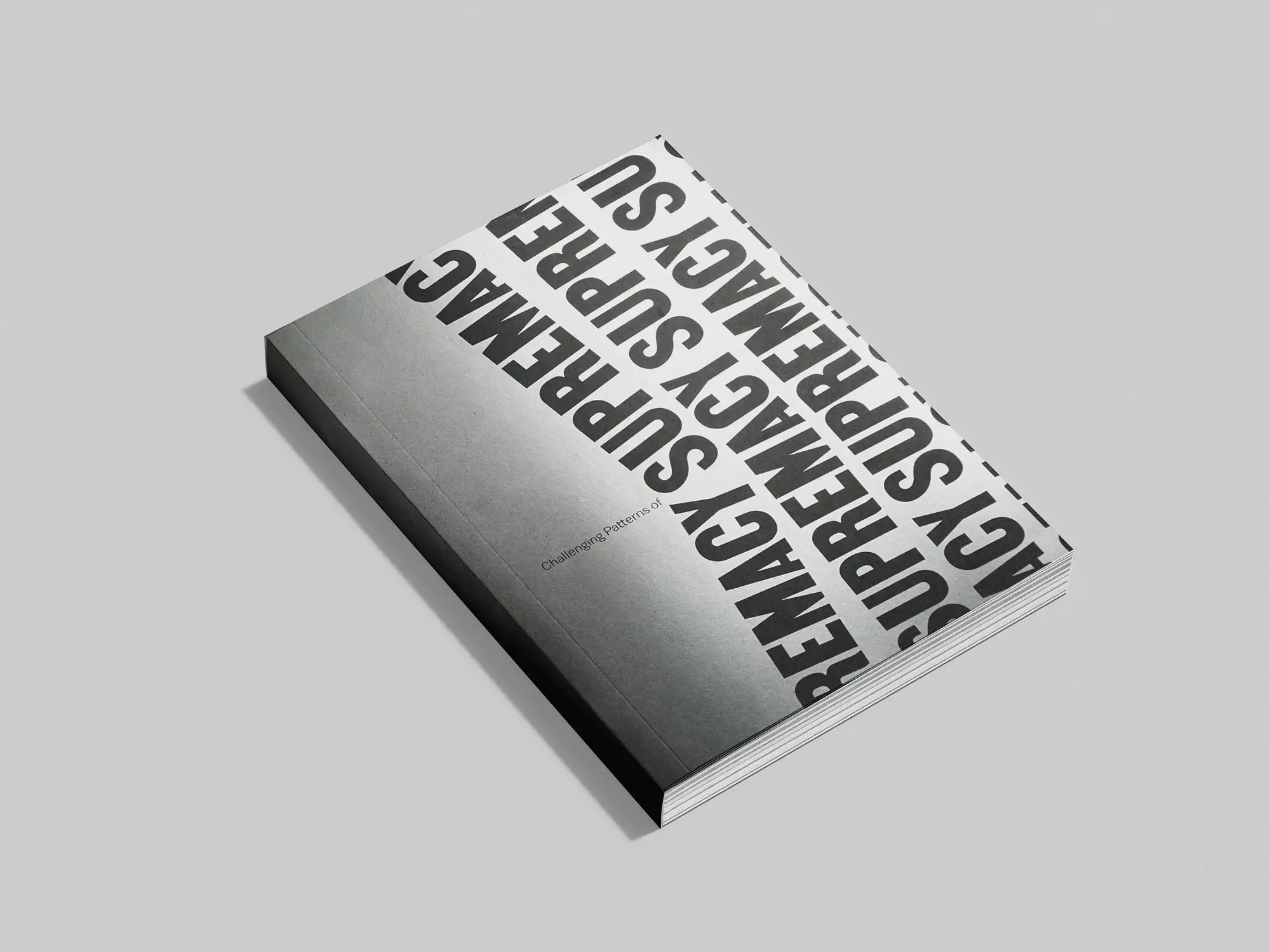
Challenging Patterns of Supremacy
Provocations from Collective Pedagogy, Practice, and Organizing
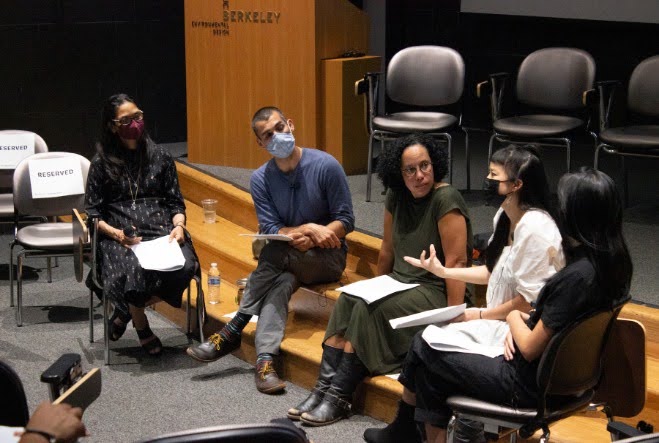
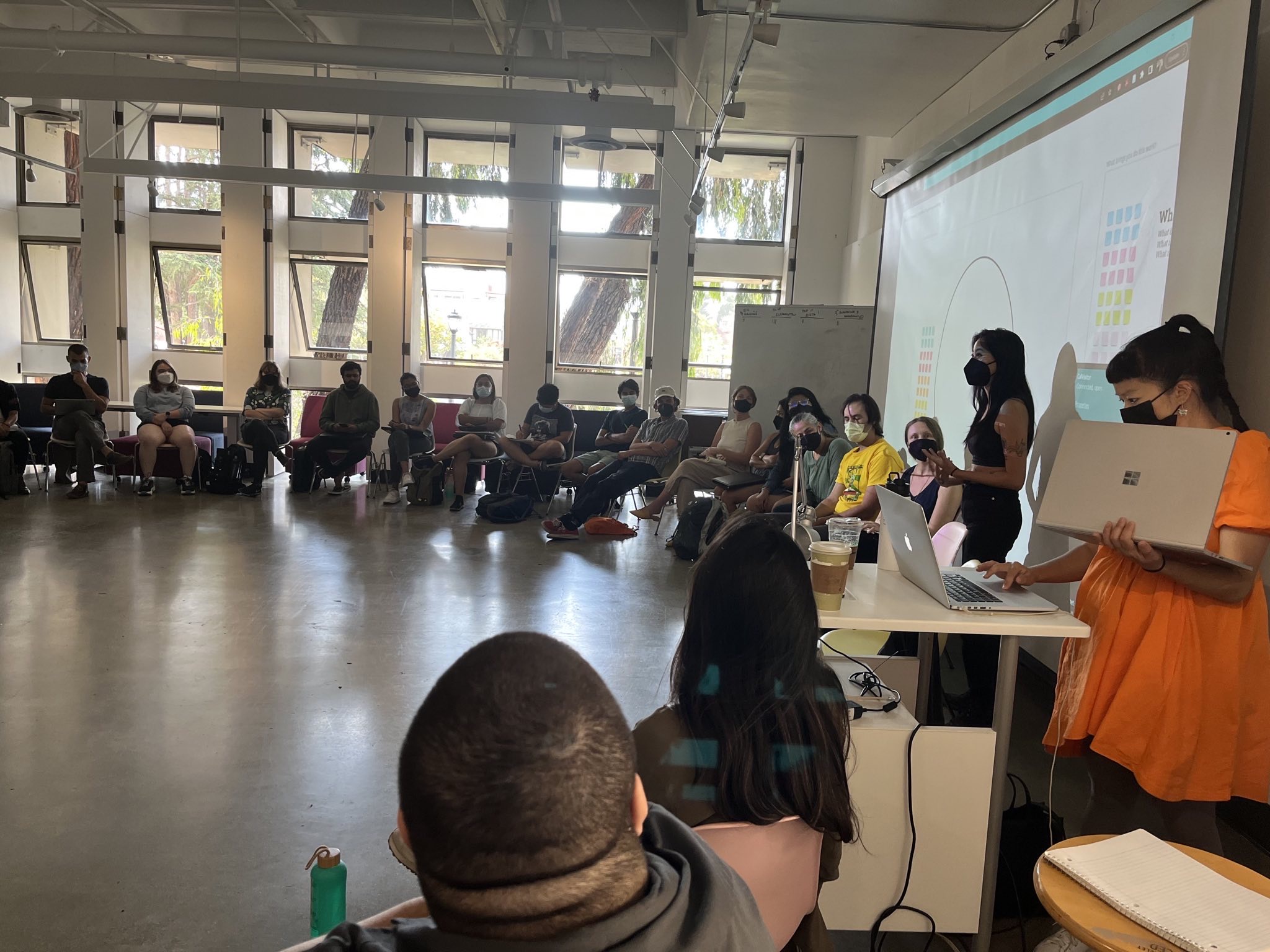
Drawing from the lecture and workshop, “Challenging Patterns of Supremacy: Provocations from Collective Pedagogy, Practice, and Organizing,” held at the College of Environmental Design, University of California, Berkeley in September 2022, this experimental publication offers a series of provocations on consent, power, supremacy, institutions, and hope that can form the basis for oppositional practices. Both the lecture and workshop were designed and facilitated by the authors—Dave Pabellon, Bz Zhang, Lisa C. Henry, Shalini Agrawal, Shawhin Roudbari, and Tonia Sing Chi—building on DMU’s collective practice and activism.
Office Hours
Provocations from Collective Pedagogy, Practice, and Organizing
DMU Office Hours emerged as an ongoing program of informal, virtual gatherings that created space for connection, exchange, and collective learning across the network. Operating beyond the constraints of time zones and geographic boundaries, these sessions enabled students, educators, and practitioners to come together regularly to share resources, reflect on personal and professional experiences, and collectively develop ideas.